
My story
I dropped out of college to trade crypto full time.
It wasn't an easy call, and it wasn't one I'd tell everyone to make. But I'd spent enough nights glued to charts to know this was what I wanted to do, and that I'd only get good at it by going all in. So I did.
The early days were rough. I lost money, made every mistake in this guide, and learned most of what's in here the hard way: chasing pumps, sizing too big, trusting the wrong callers, and letting emotions run my trades.
Over time I built a process: reading charts properly, tracking the right wallets, finding the KOL side-wallets and team wallets that move before everyone else, and sticking to strict risk rules. That process is what this guide is built on.
Last month (September 2026) I realized +$63.7K on Axiom: about $462K bought, $518K sold, a 14% return on volume.
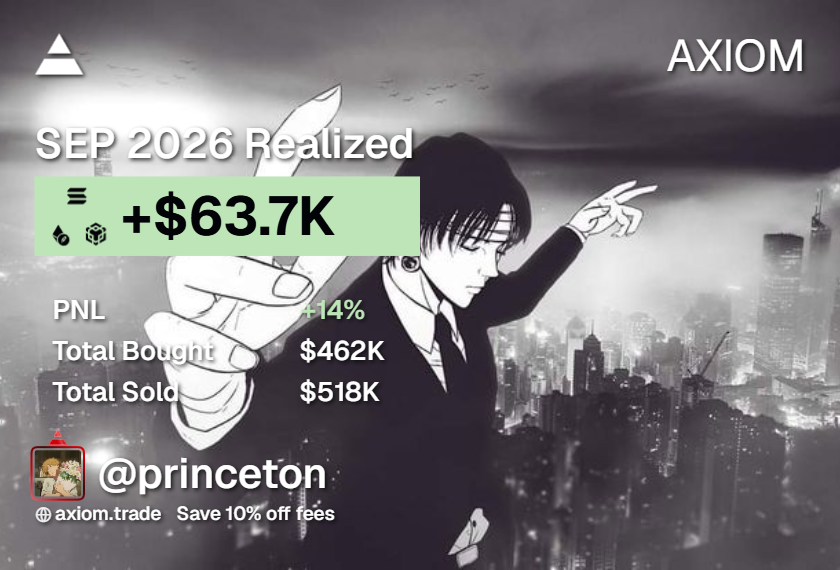
I'm not sharing that to flex. I'm sharing it because a few years ago I was exactly where you might be now, starting from zero. Everything I wish someone had told me back then is in this guide, for free.
– Princeton
Meet Mo, my partner
Vantage isn't a one-man show. My partner Mo (@bigmoeycuz) is one of the best small-account traders I know.
He recently completed a $1K → $100K challenge on fomo, documented in real time on his X account: from $1K to over $90K in about six weeks, then past $100K. Every big trade was posted as it happened, wins and mistakes included. Now he's working on $10K → $1M.
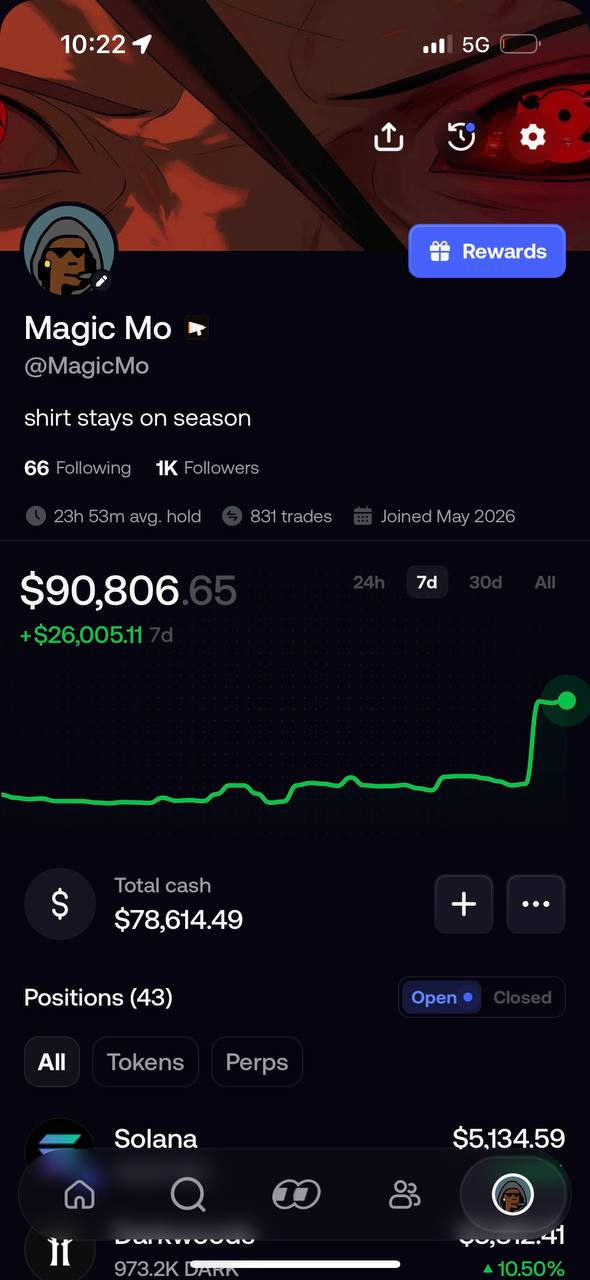
His biggest lesson for small accounts: don't marry your bags. When your account is small, you can't afford conviction. Run it up and take profit.
Want to learn straight from Mo? He runs 1-on-1 coaching calls for Vantage VIP members.
Welcome
Welcome to the Vantage Crypto Trading Guide: one place to learn how to navigate crypto. Whether you're brand new and want to understand Bitcoin, Ethereum and Solana, or you're ready for the high-risk, high-reward world of memecoins, this guide is for you.
Crypto moves fast. It's volatile and full of opportunity if you know how to approach it. This guide gives you the knowledge, tools and strategies to trade with confidence, wherever you're starting from.
What you'll learn:
- Foundations: how crypto works and the basics of technical analysis.
- Memecoins: what drives them, the risks, and how to spot plays early.
- Practical skills: setting up a wallet, choosing a trading platform, and using wallet trackers.
- Real-world application: tracking smart-money buys, reading volume, and building the mindset to stay in the game.
Let's get started.
Chapter 1
The Basics
What is cryptocurrency?
Cryptocurrency is digital money secured by cryptography and recorded on a decentralized blockchain.
Key features
- Decentralized: no single company or government controls it.
- Transparent: every transaction is recorded on a public ledger.
- Secure: cryptography protects transactions.
Why crypto instead of regular (fiat) money?
- It's borderless and works globally, 24/7.
- Many coins have a limited supply. Bitcoin, for example, is capped at 21 million coins.
- It isn't controlled by central bank money printing, so its supply can't be inflated by government policy.
The big reason people love crypto: it's one of the few places where someone starting with very little can build something meaningful. I've seen it firsthand. Plenty of people around me, myself included, started with as little as $100. That said, most people who trade lose money, so learn the skills before you size up.
The Big 3: Bitcoin, Ethereum, Solana
Bitcoin (BTC)
- The first cryptocurrency, often called "digital gold."
- Use case: store of value and peer-to-peer payments.
- Its fixed supply and decentralization make it the largest crypto by market value.
Some people struggle to see Bitcoin's value; others see it as one of the most precious assets in the world. That tension is exactly why it's called digital gold.
Ethereum (ETH)
- Known for smart contracts and decentralized apps (dApps).
- Use case: powers DeFi, NFTs, stablecoins and much more.
- The backbone of Web3 development.
Solana (SOL)
- A high-performance blockchain with fast, low-cost transactions.
- Use case: dApps, DeFi, payments and, above all, memecoin trading.
- Competes with Ethereum on speed and cost.
As a beginner, these are the only three you really need to know. This guide focuses on Solana, because that's where memecoin trading is most liquid and cheapest. Even the official TRUMP memecoin launched on Solana (January 2025).
How crypto markets work
Exchanges
- Centralized exchanges (CEXs): platforms like Coinbase, Kraken and Binance. They work like a brokerage and usually require ID verification (KYC). Note: Binance.com isn't available to US residents. Americans use Binance.US or another US exchange.
- Decentralized exchanges (DEXs): platforms like Jupiter, Raydium and PumpSwap let you trade directly from your own wallet, with no middleman.
Use centralized exchanges to buy and sell the Big 3. If you're buying memecoins there, you're way too late. Memecoin trading happens on DEXs, where you can find plays early. By the time a coin lists on a big CEX, the early move is usually over, and early holders often sell into that listing news.
Volatility
- Crypto prices are driven by news, adoption and sentiment, and they move fast.
- Volatility creates opportunity, but it also means high risk.
This is not the stock market. Nobody is coming to save you. It's you vs. you. If you get rugged, there's no one to call. If you hit, that's on you too.
Market cycles
- Bull market: rising prices and optimism.
- Bear market: falling prices and pessimism.
- Knowing where you are in the cycle is key to trading well.
When this guide was first written (early 2025), we were in the middle of a huge bull run, and ETFs that once seemed like fantasy were becoming reality. Since then, US spot Bitcoin, Ethereum and Solana ETFs have all launched (the first spot Solana ETF began trading in October 2025). Markets change, so always judge the current cycle for yourself rather than assuming the last one will repeat.
Chapter 2
How to Read a Chart
Before you buy anything, you need to know how to read what you're buying.
Technical analysis (TA) is the study of price movement and patterns to anticipate likely moves and make better decisions. This chapter covers the core tools.
Chart types
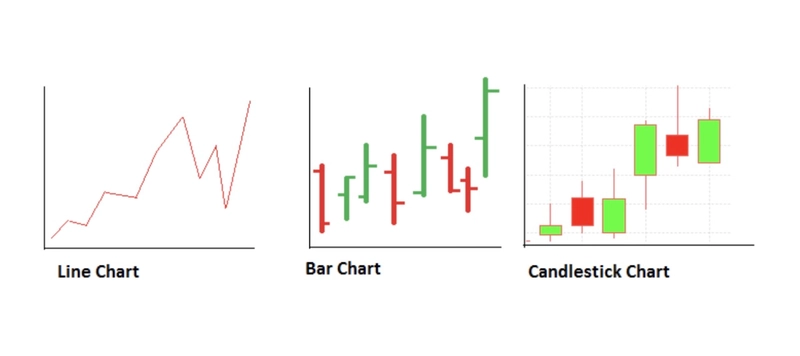
- Line chart: connects closing prices with a line. Great for seeing the overall trend, but it hides the highs, lows and intraday moves.
- Bar chart: shows the open, high, low and close (OHLC) for each period. More detail on price action.
- Candlestick chart: the most popular chart among traders. Shows OHLC as candles that are easy to read and great for spotting patterns.
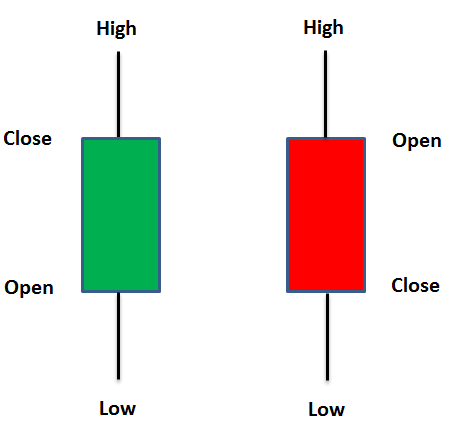
We'll focus on candlesticks. Each candle represents one period of whatever timeframe you pick. On the 1-hour chart, each candle is one hour.
- Green candle: price closed higher than it opened.
- Red candle: price closed lower than it opened.
Candlestick patterns
There are many candlestick patterns. These are the most useful:
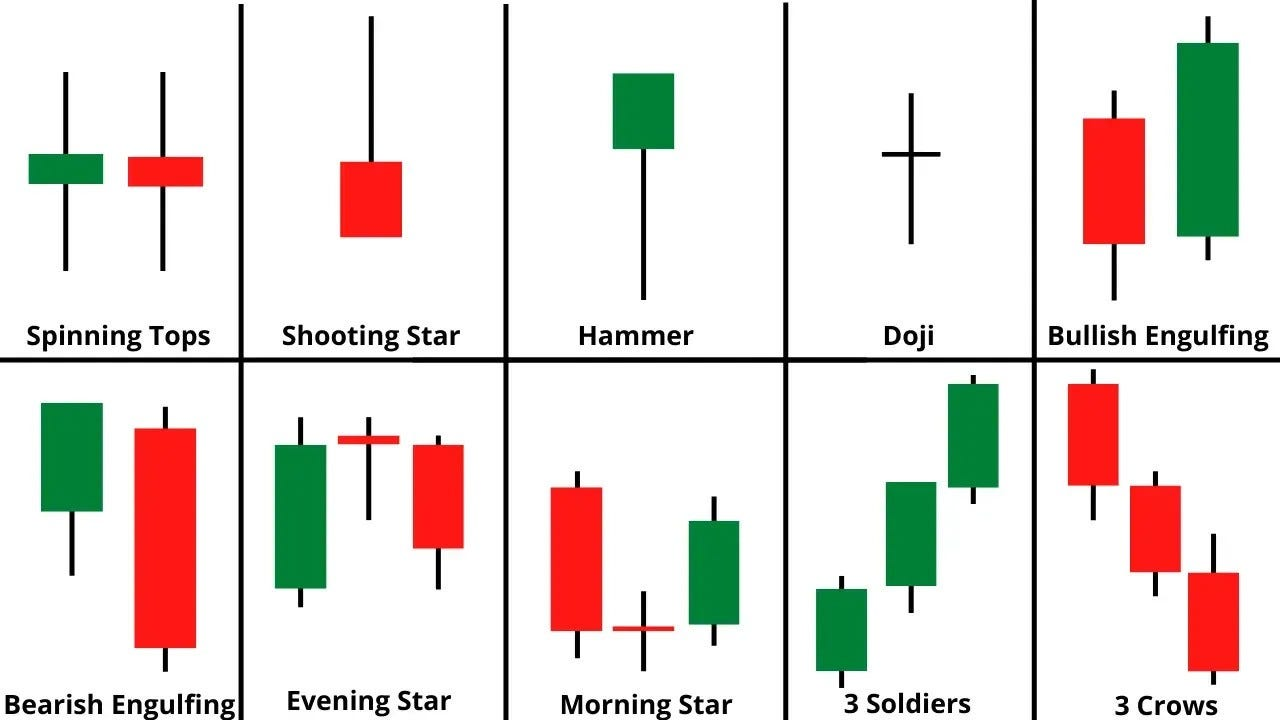
The shooting star and hammer matter most. On higher timeframes they often signal tops and bottoms.
Support and resistance (S/R)
Support and resistance are the levels where price tends to reverse or break out.
- Support: a price level where buying demand is strong enough to stop further drops. Traders often buy near support.
- Resistance: a price level where selling pressure stops further gains. Traders often sell (or short) near resistance.
How to find S/R levels
- Look at historical price action: where has price bounced or stalled before?
- Watch psychological round numbers (for example, $100,000 BTC).
Line up candle wicks and bodies with previous levels and S/R becomes obvious. Practice by opening TradingView and marking support and resistance yourself. If you can read price action, your trading life gets much easier.
Here's the Solana 2-hour chart with the touch points highlighted:
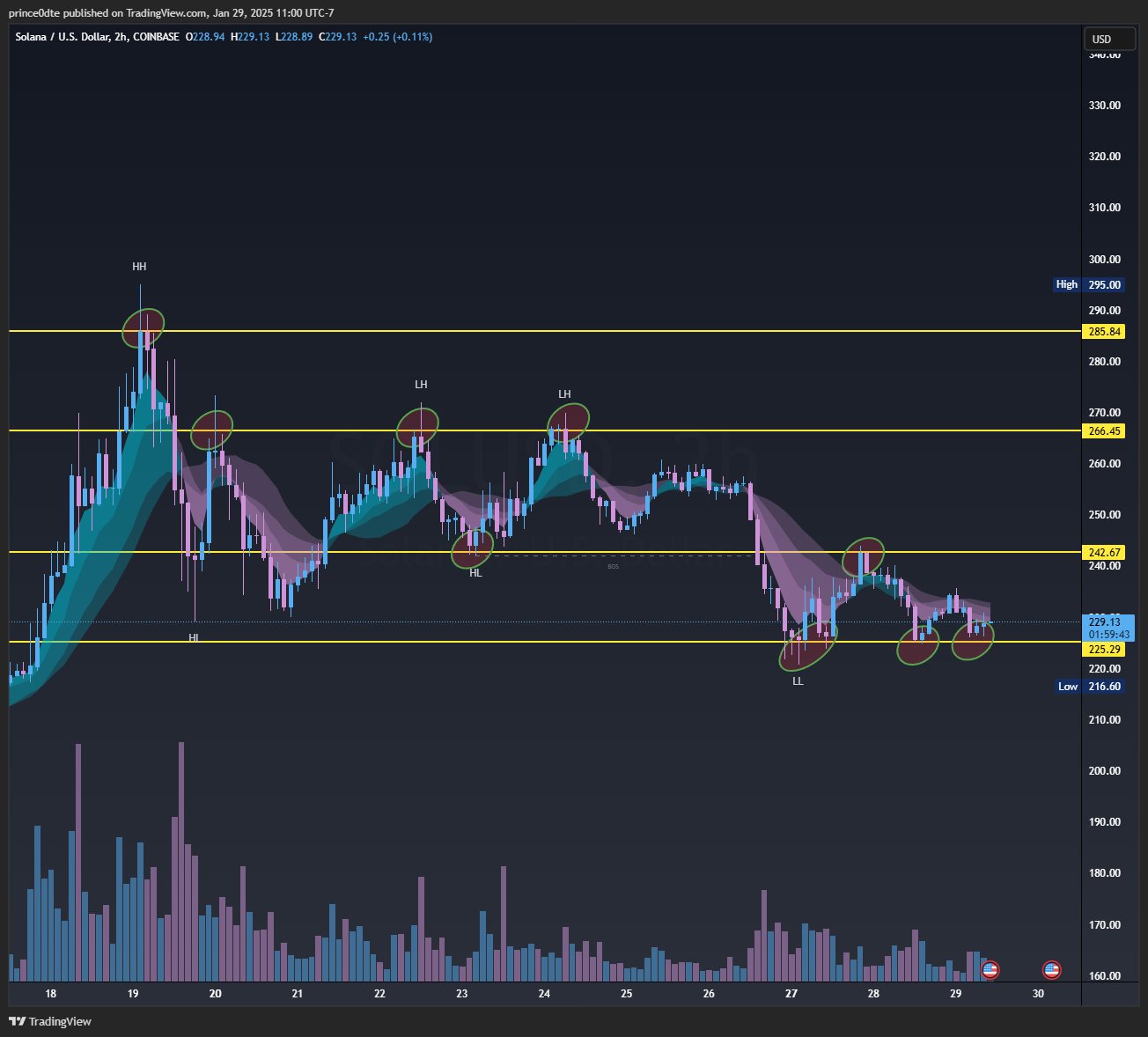
Some traders call this supply and demand. It's the same idea, and separating them just overcomplicates it: supply = resistance, demand = support. When supply is high, people sell; when demand is high, people buy.
Chart patterns
The market moves in a rhythm: strong move, consolidation, strong move. That's really all you need to know. Chart patterns just help you visualize it.
Some traders say chart patterns don't work. I disagree. On higher timeframes, they absolutely work.
- Continuation patterns: the current trend is likely to continue.
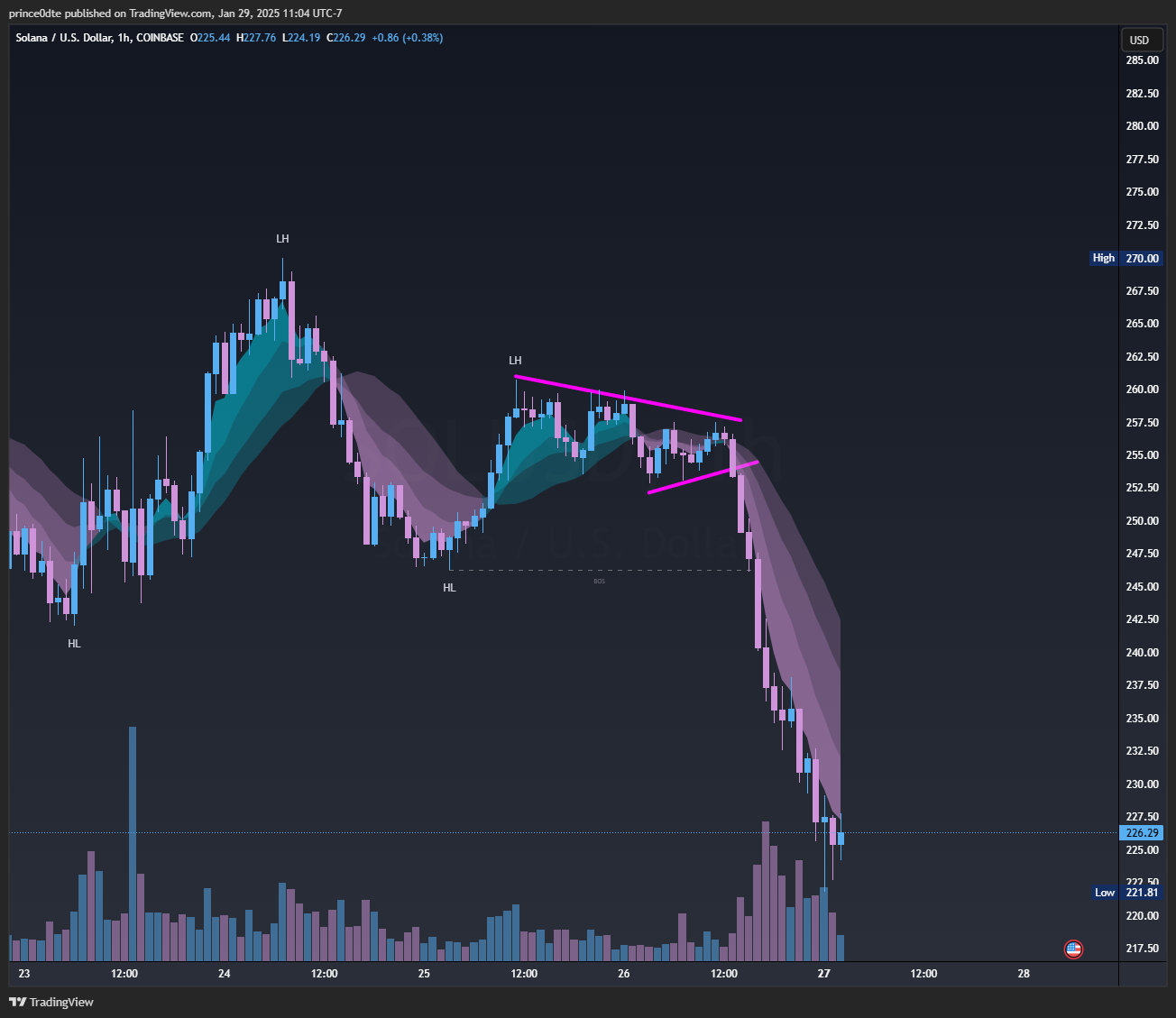
- Flags / wedges: short consolidations before the trend resumes.
- Triangles: symmetrical, ascending or descending.
- Reversal patterns: the current trend is likely to flip.
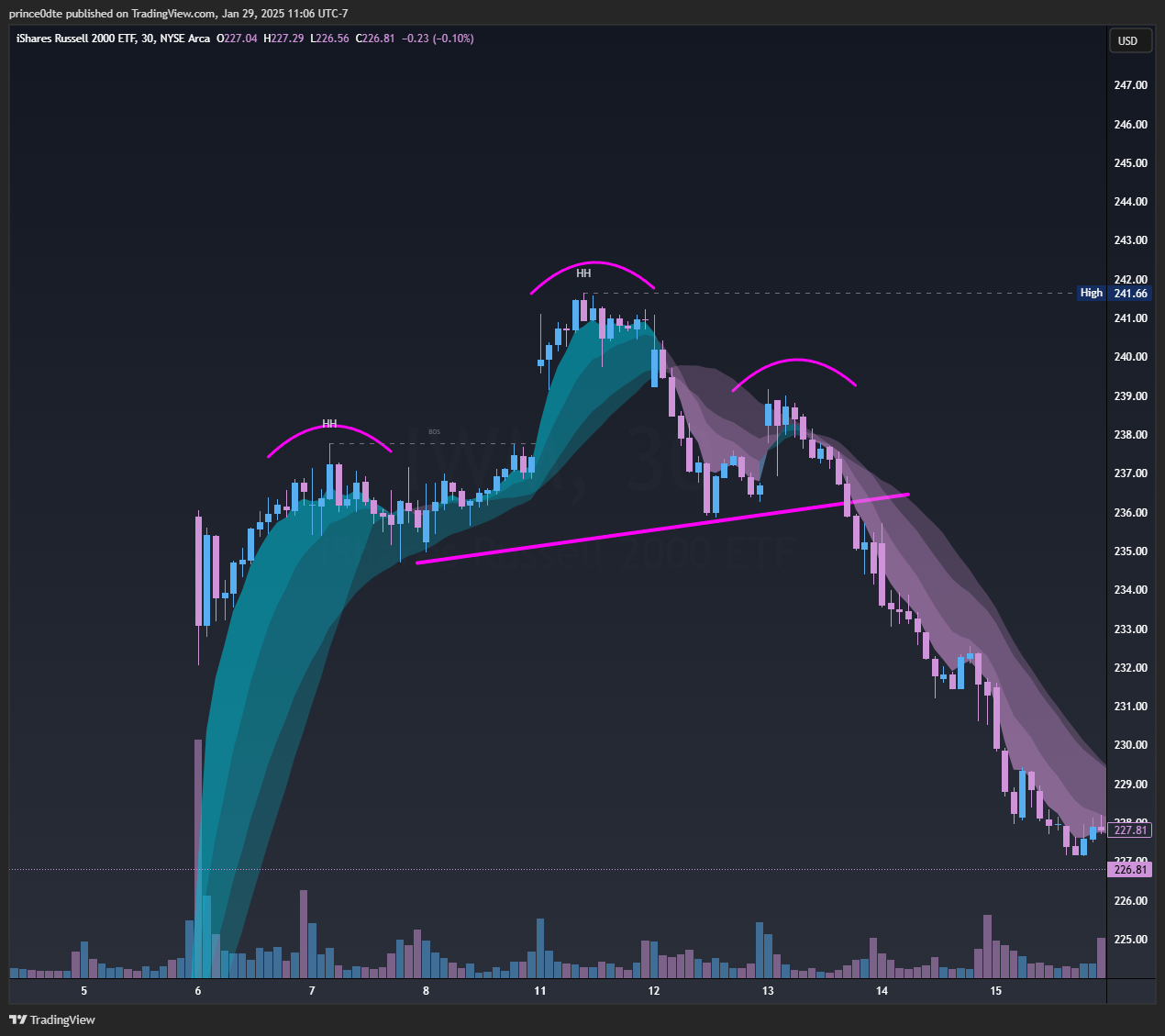
- Head and shoulders: bearish reversal after an uptrend.
- Double tops and bottoms: reversals after big moves.
- Breakout patterns: price is likely to break out of consolidation.
- Wedges, cup and handle, ascending triangles.
These are the only patterns you need to study.
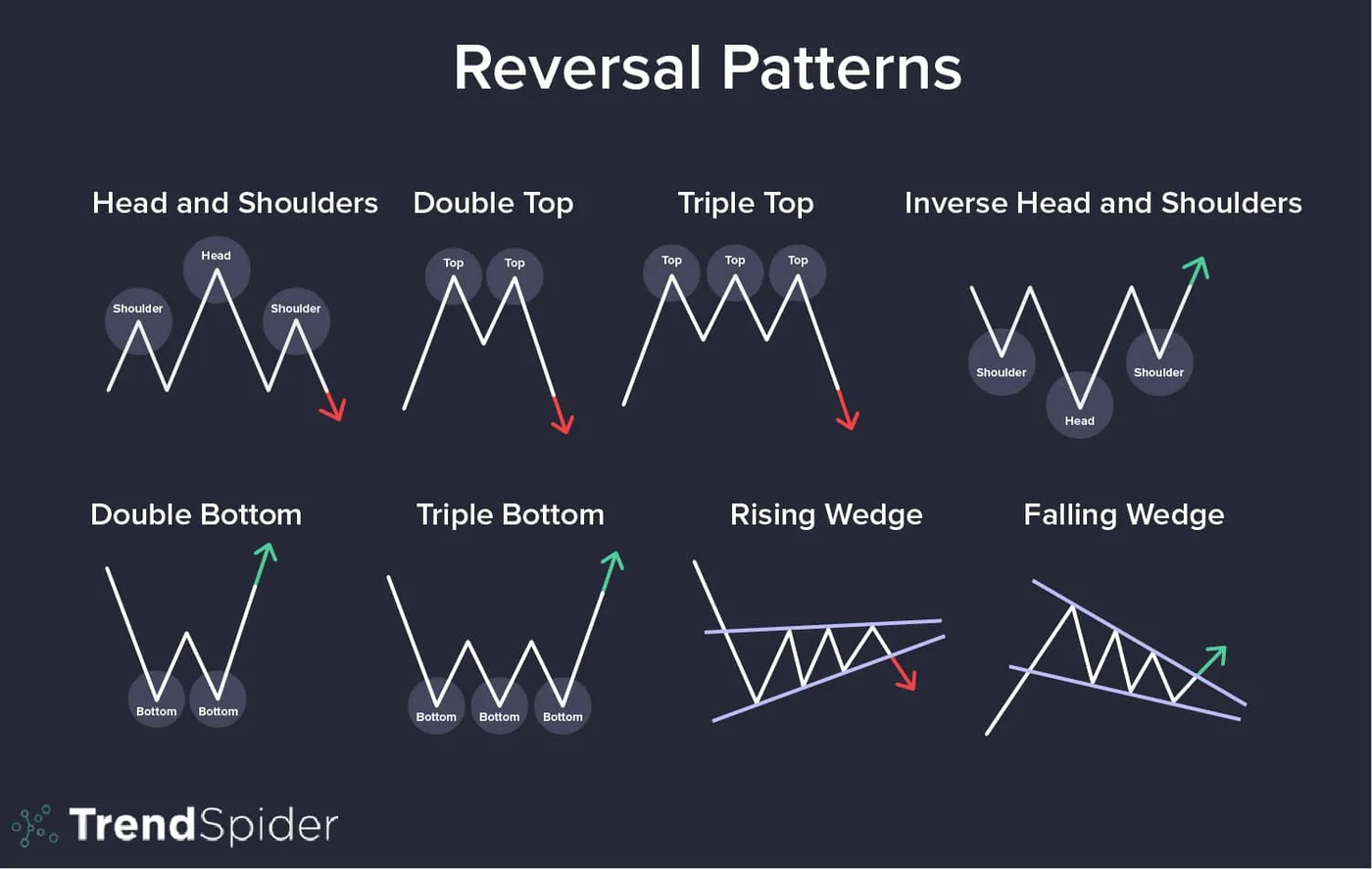
Examples
Bearish wedge break:
Bullish wedge break:
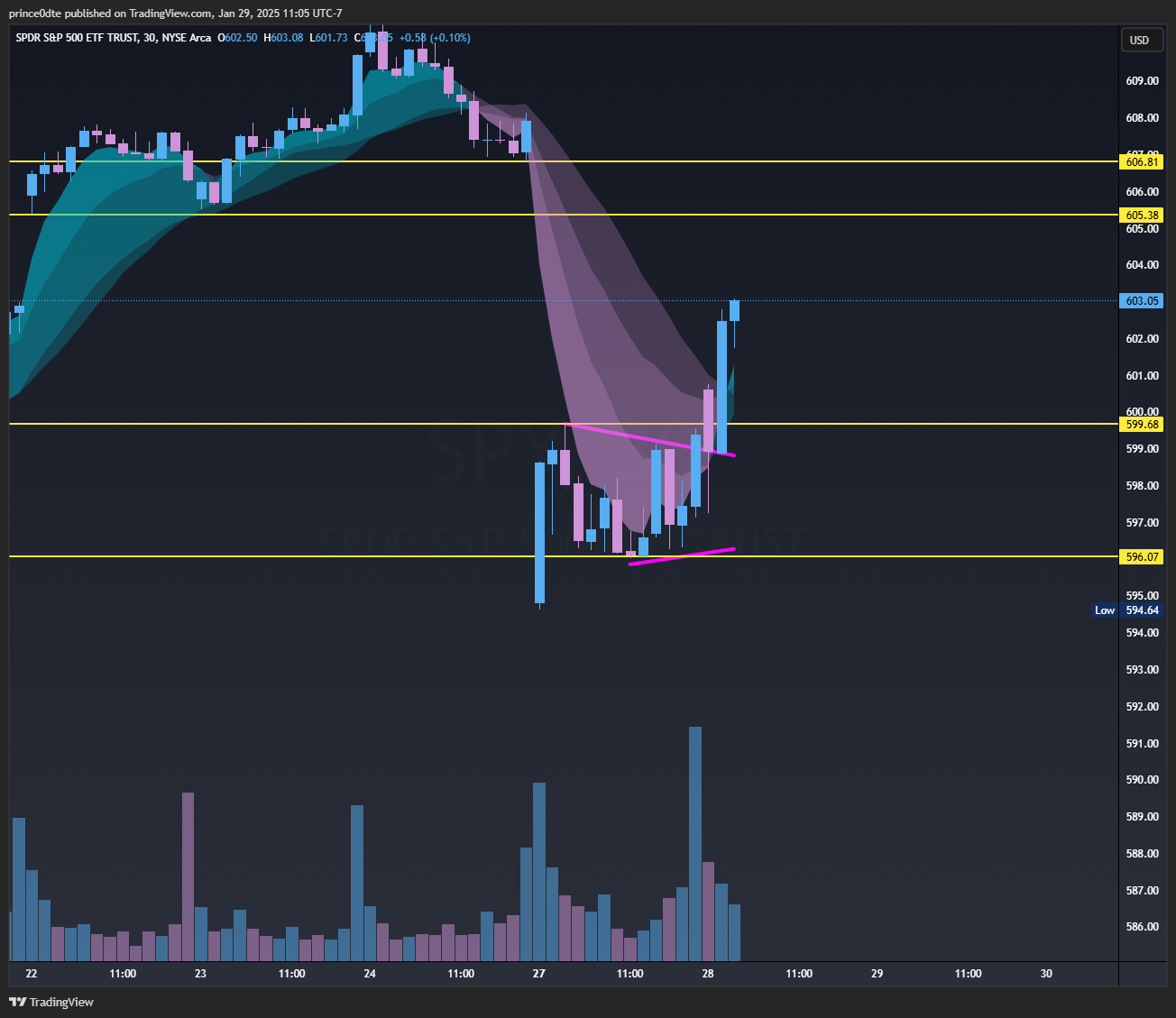
Head and shoulders:
Inverse head and shoulders:
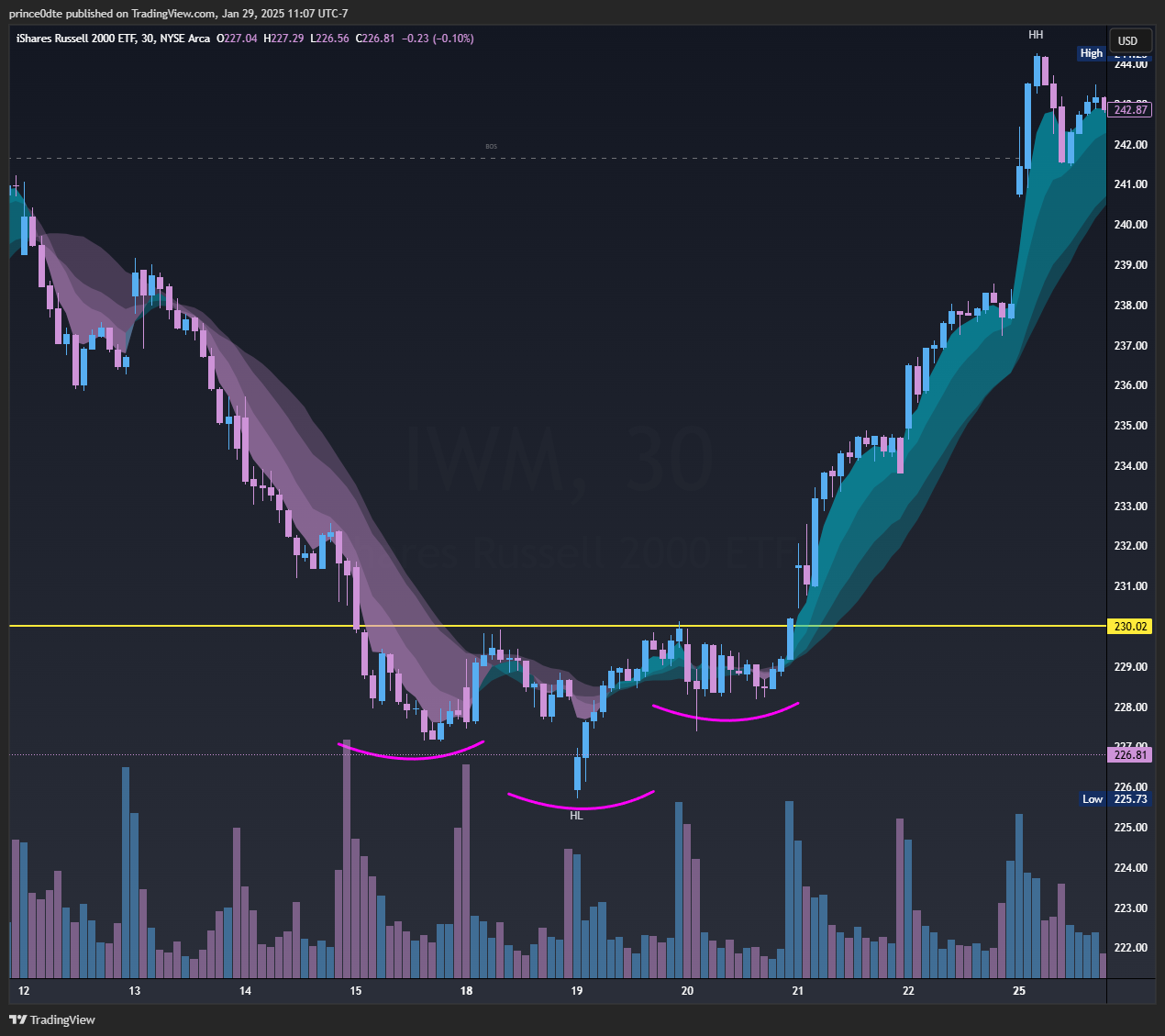
Patterns don't need to be perfect. Go to a chart and practice drawing them. You'll see a lot of them play out.
Chapter 3
How to Buy
Buying crypto can feel intimidating, but it's simple once you know the steps. This chapter covers wallets, funding, your first purchase and moving funds into your own wallet.
Types of wallets
A crypto wallet lets you store, send and receive crypto. There are two main types:
- Hot wallets (online)
- Connected to the internet via an app or browser extension.
- Examples: Phantom, MetaMask (which now supports Solana too), Solflare, exchange wallets.
- Best for beginners and active traders, but less secure than cold wallets.
- Cold wallets (offline)
- Physical devices that keep your keys offline.
- Examples: Ledger, Trezor.
- Best for long-term storage and maximum security.
Pro tip: Back up your recovery phrase on paper and store it somewhere safe and offline. Never type it into a website, and never share it.
Trading: use a hot wallet. Holding: use a cold wallet.
Funding your account
Before buying crypto, you need to fund an exchange account.
- Bank transfer: usually the lowest fees, but slower.
- Credit/debit card: instant, but usually higher fees.
- Peer-to-peer (P2P): buy directly from other users (for example, Binance P2P, where available).
- On-ramp providers: services like MoonPay, Transak or Coinbase Onramp convert cash to crypto, often directly inside a wallet such as Phantom.
Before you deposit
- Complete identity verification (KYC) if the exchange requires it.
- Check deposit limits, fees and processing times.
Personally, I use a centralized exchange linked to my bank for buying and selling. My go-to is Kraken.
Buying crypto on an exchange
Once your account is funded:
- Log in to your exchange.
- Go to Buy or Trade.
- Choose the coin (BTC, ETH or SOL).
- Enter the amount, or how much cash you want to spend.
- Review the details, including fees.
- Confirm.
You now own crypto. First step done. Now for the good stuff: trading coins.
Install Phantom
First, install Phantom, either the browser extension or the mobile app. Only download it from phantom.com or your official app store; fake wallet apps are common.
Create a wallet, write your secret recovery phrase on paper, and never show it to anyone.
You now have a self-custody hot wallet. Opening it doesn't require ID verification. Your funds are controlled by your keys, not a company. (Remember, every transaction is still public on-chain.)
Moving crypto to your wallet
- In Phantom, tap Receive and copy your Solana address.
- On your exchange, choose Withdraw and select SOL on the Solana network.
- Paste your Phantom address and enter the amount. Send a small test amount first.
- Confirm the withdrawal and any security prompts (like 2FA).
- Wait for the transaction to confirm on-chain.
You should now see something like this:
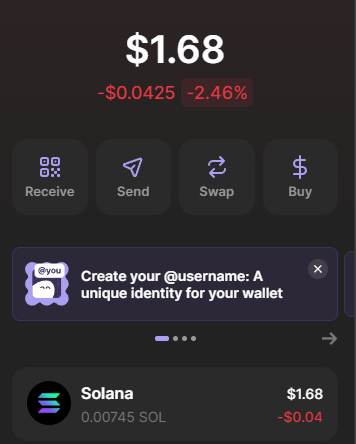
Congrats, you're already ahead of most people. Now let's get into actually trading.
Chapter 4
Memecoins
Memecoins are one of the most talked-about corners of crypto. Unlike Bitcoin or Ethereum, they're driven by internet culture, trends and social media hype. This chapter covers what they are, where they came from, and their risks and rewards.
What are memecoins?
Memecoins are tokens inspired by memes, jokes or internet culture. Most have little or no technology or real-world use behind them. They live on community and viral attention.
Characteristics
- Community-driven: value depends on the strength of the community and social presence.
- Extremely volatile: prices can explode or collapse in minutes.
- Low starting market cap: most launch tiny, which attracts speculators.
Well-known examples
- Dogecoin (DOGE): the first memecoin, created as a joke in 2013.
- Shiba Inu (SHIB): marketed as the "Dogecoin killer," exploded in 2021.
- Pepe (PEPE): inspired by the Pepe the Frog meme, launched in 2023.
A short history
- 2013, the beginning: software engineers Billy Markus and Jackson Palmer created Dogecoin as a Bitcoin parody. It quickly built a loyal community.
- 2021, the boom: social media hype and celebrity attention (famously Elon Musk) sent DOGE, SHIB and others parabolic.
- Today: thousands of memecoins launch every day. Most die quickly, but a few build real traction and large market caps.
Memecoins on Solana are a different beast. Because Solana fees are so low, anyone can launch a memecoin for next to nothing, most commonly on pump.fun.
pump.fun changed the market forever. Tens of thousands of tokens launch there every day (roughly 40,000 to 55,000 a day in late October 2026). That makes finding the runners and avoiding rugs harder than ever. That's what Vantage is here to help with.
Why memecoins are so popular
- Hype and virality: they spread fast on social media and create FOMO (fear of missing out).
- Community: many people join for the memes and the people, not just profit.
- Low entry point: tiny market caps make them accessible to small accounts.
- Speculative upside: people chase 10x or 100x returns, though these are rare.
The risks
- No utility: most memecoins have no real use or technology.
- Extreme volatility: prices move on hype, not fundamentals.
- Scams and rug pulls: many are created to steal money; developers dump or abandon the project.
- Short lifespan: most lose momentum and go to zero.
What moves memecoin prices
- Hype cycles: fast pumps on social trends, followed by sharp corrections.
- Community: an active, passionate community can carry a coin a long way.
- Whales: large holders can move price by buying or selling in size.
- News and influencers: one post from the right account can send a coin flying, or crashing.
Memecoin trading is what we focus on at Vantage. Played well, it's where the biggest opportunities are, and the biggest risks. Next: how to actually trade them.
Chapter 5
How to Trade Memecoins
Memecoins follow their own rules. They run on hype, community activity and social trends, not fundamentals. This chapter covers your trading setup, where to find alpha, and the core strategies.
Choosing your trading platform is crucial. Start by figuring out what kind of trader you are: phone-first or desk-first. Most good traders end up using two or three of the tools below together.
fomo: social trading on your phone
fomo is a mobile trading app built around following other traders. You can:
- Browse leaderboards (24-hour, 7-day, 30-day and all-time) and open any trader's profile, PnL and trade history.
- Follow traders and turn on notifications so you're pinged when they buy or sell.
- See where other traders bought and sold, overlaid right on the chart.
It isn't automatic copy trading. You get the alert and decide yourself, so you'll always be a little behind the person you follow. That's why we use it for discovery, finding traders and KOLs worth tracking, more than for blindly copying. More on that in Chapter 6.
Sign up here (accounts created through a referral link get a small trading-fee discount): fomo.family/r/0xprinceton
pump.fun: where the coins launch
pump.fun is where most Solana memecoins are born, and it's become a social app as well. Traders and KOLs have public profiles, make "callouts" on coins they hold, and get ranked on a PnL leaderboard. On the mobile app you can follow any wallet, even one without a pump.fun account, and get buy and sell notifications.
That makes pump.fun one of the best places to see who is consistently early. Here's my profile: pump.fun/u/0xprinceton
Axiom: trade from your desk
At my desk, I want a chart in front of me while I trade. Buying and selling instantly while watching the chart is a hugely powerful feature.
For that, I use Axiom. Sign up through my link to get 10% off Axiom's trading fees (the discount only applies to new accounts created through the link): axiom.trade/@princeton
My current Axiom settings (Preset 1):
- Buy: 30% slippage, Auto Fee on (max 0.05 SOL), MEV mode Secure. Memecoins move fast, so higher buy slippage keeps you from missing entries.
- Sell: 20% slippage, 0.005 SOL priority, 0.003 SOL bribe, MEV mode Secure, so exits land quickly and don't get sandwiched.
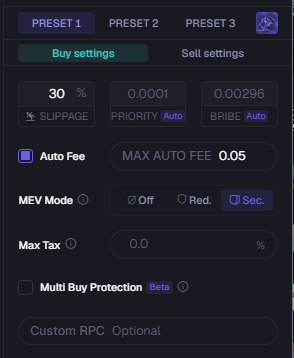
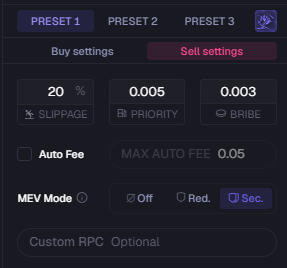
Tweak these to your size and risk. Higher slippage fills faster but can cost you on volatile candles.
Axiom also includes wallet trackers, live X (Twitter) trackers and holder/insider views at no extra cost. These are usually paid tools elsewhere.
Prefer Telegram? Bots like Bloom let you trade by pasting a contract address (CA) straight into Telegram, which is handy if your alpha chats already live there.
Don't be afraid to watch a YouTube walkthrough to learn any of these platforms.
Stay safe: Only open trading sites from links you trust or by typing the URL yourself. Fake lookalike sites that drain wallets are common. Never share your private key or recovery phrase with any bot, site or person.
Where to find alpha
X is still one of the best places to find alpha. The secret is following the right accounts, especially the trench warriors. Build your own list over time: when a coin runs, look at who was talking about it early, then check their on-chain trades on fomo or pump.fun to see whether they actually bought early or just posted late.
Alpha chats and Telegram channels
We run our own alpha chats in the Vantage Discord. There's nothing like making money with friends.
Telegram call channels can be useful too, but if you aren't fast, you will be exit liquidity. Use them as confirmation for plays you're already in, not as your entry signal.
The ones I recommend:
- t.me/arcanegems
- t.me/PowsGemCalls
- t.me/zincalpha
- t.me/CTtradec: perps and majors
- t.me/chit_korea: Korean quant
Those are the only channels I really listen to. Everything else is noise.
Tools for finding plays
- j7tracker.io: a Twitter/X tracker that pings you the moment the accounts you follow post, so you see narratives and CAs before the crowd.
- Frontrun: shows labeled wallets you don't already track, plus their past Twitter/X history. It's very useful when you're scanning new pairs, because you can see at a glance whether known KOLs, traders or insiders are in a coin. (Referral link.)
- fomo and pump.fun: browse the coins traders are talking about and read their theses. Callouts and comments on pump.fun, and the trader feeds on fomo, show you why people are buying, not just that they are. A coin with a clear story and good traders behind it is worth a closer look.
Memecoin trading strategies
Strategy 1: New pairs / high-volume gambling
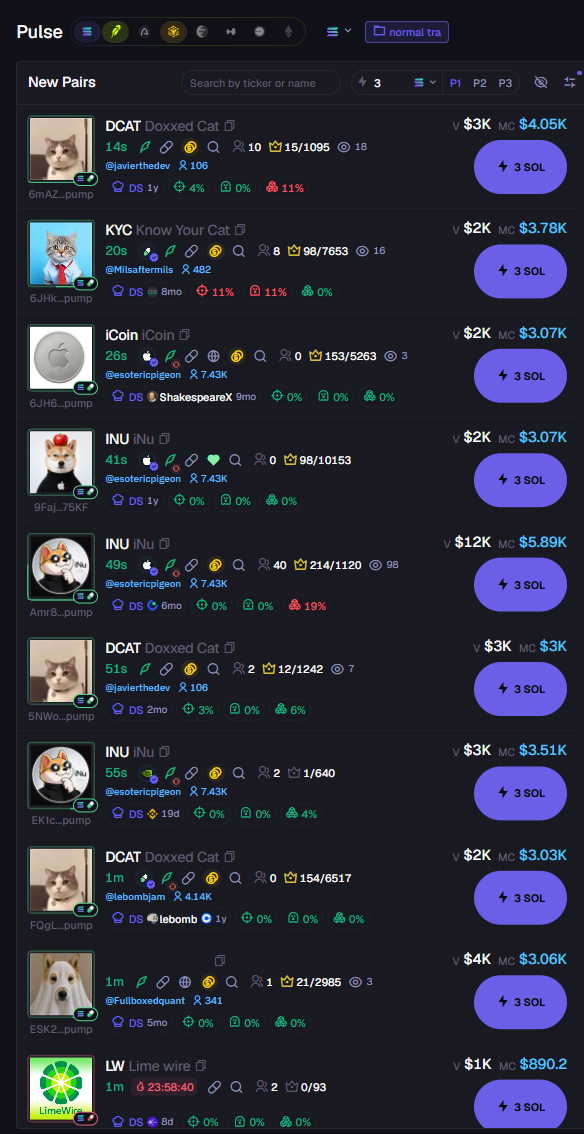
Trading brand-new pairs, or quick in-and-out plays on sudden volume.
Spot a coin that looks good early and ape a small amount. High risk, high reward: a low-market-cap coin can move 5–10x in seconds if you pick right, and go to zero just as fast.
This style is very risky. These are brand-new coins that just launched on pump.fun. Do your own research on top of anything you see from KOLs (key opinion leaders).
Stay away from this if you're a beginner.
Strategy 2: Buy dips, sell rips
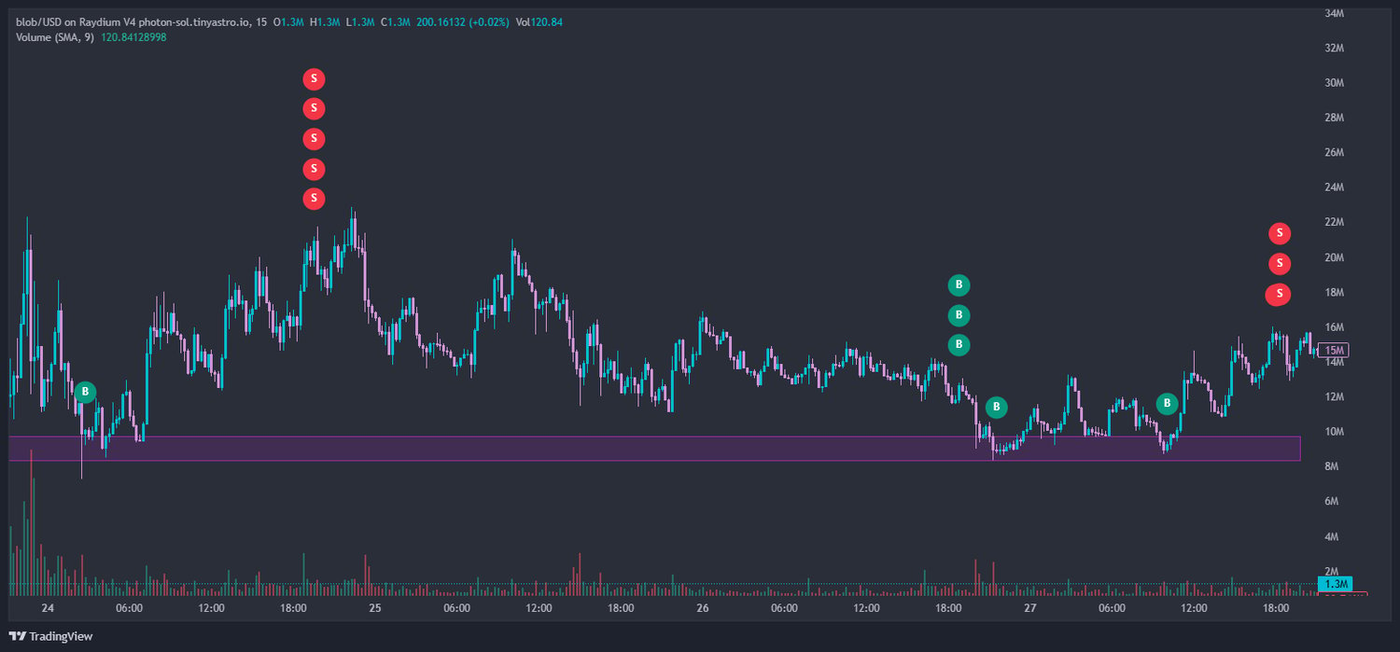
This is my preferred strategy.
It leans on technical analysis and focuses on established coins and cults on Solana. It's less risky because these coins aren't new. They've survived dips and have an established community.
The core of it:
- Only trade coins that have already proven they have a community and survived at least one big dip.
- Mark support and resistance on the chart (Chapter 2).
- Buy into support when price pulls back, not into green candles.
- Sell into strength near resistance, and take profit on the way up instead of waiting for the exact top.
Strategy 3: Track the wallets that move first
This works best combined with Strategy 2. Instead of reacting to a public call, you track the wallets that buy before the call: KOL side-wallets and early team wallets. When 3–4 of the wallets you track all buy the same coin, it's likely considered alpha (insider info), and there's a good chance it keeps going.
Then you either chase it, if the market cap is low enough that the gamble is worth it, or wait for a dip and buy there.
This is how I find most of my early runners. Chapter 6 shows exactly how to find these wallets and how to use them.
Chapter 6
Following Smart Money
"Smart money" used to mean any wallet with a high win rate. That edge is mostly gone: the obvious wallets are tracked by thousands of copy-bots. The new meta is going one level deeper and finding the wallets that move before the crowd:
- KOL side-wallets: secondary wallets that key opinion leaders (callers) buy from before or alongside their public posts.
- Team and dev wallets: insider wallets connected to a coin's deployer that buy at launch.
To find both, you reverse-trace transactions on-chain to link wallets together. Then you use them to get in before the candles everyone else is chasing.
The danger of the "runner of the day"
The worst thing you can do is buy into the day's big runner without doing your research.
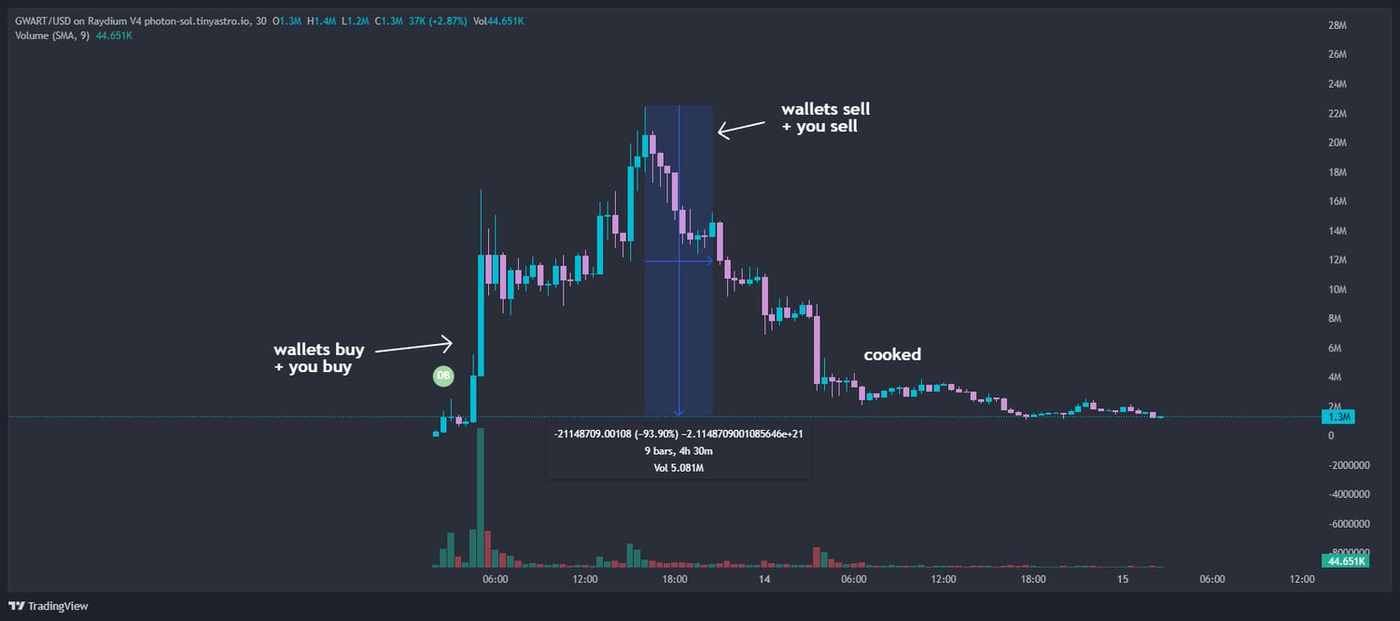
Here's why:
- Unless you're in very early, you'll probably lose money.
- If a ticker is already being shilled in big Telegram channels, or a KOL just posted it, you're probably late.
- The people who were early are the ones selling to you. Your job is to find those wallets.
Your toolkit
- fomo and pump.fun: leaderboards, trader profiles, callouts and buy/sell notifications. Best for finding KOLs and seeing their public wallets.
- Frontrun: labeled wallets you haven't added to a tracker, with their past Twitter/X history. A quick way to spot KOL and team wallets inside a new coin.
- Axiom and GMGN: wallet trackers with alerts, plus token pages that label holders as dev, insider, sniper, bundler and top 10.
- Solscan (or any Solana explorer): full transaction history for any wallet, including who funded it and where its money went.
- Bubblemaps: shows a token's holders as clusters, so connected wallets stand out visually.
- Arkham: entity labels (exchanges, funds, known traders) and a visual graph of transfers between wallets.
Step 1: Find KOLs worth tracking
Before you look for side-wallets, you need KOLs who are actually good. Use the fomo and pump.fun leaderboards plus X.
What to check on a profile:
- Consistency: look at the 30-day and all-time PnL, not just one big day. One huge win and lots of losses is a gambler, not an edge.
- Trade count: 50 trades tell you far more than 5.
- Holding time: if they exit within seconds, you can't follow them manually. Look for KOLs who hold long enough for you to react.
- Calls vs. buys: compare when they post a coin with when their public wallet bought. Big gaps, or a public wallet that only buys after the coin already moved, are a hint that the real buying is happening somewhere else.
- Who buys right before them: this is where side-wallets show up.
Step 2: Find KOL side-wallets
A side-wallet is a secondary wallet a KOL buys from before (or alongside) their public wallet or post. Here's how to find candidates.
Pattern 1: Wallets that keep buying first
- Pick 5–10 recent coins the KOL called or bought publicly.
- For each coin, open the token page on GMGN or Axiom and look at the trades in the minutes (or seconds) before the KOL's public buy or post.
- Write down every wallet that bought early. A wallet that shows up early on many of the KOL's coins is a strong candidate. One early buy is noise; a repeated pattern is a lead.
Pattern 2: Follow the money (funding source)
- Open the candidate wallet on Solscan and sort its transactions oldest first. The first incoming SOL is its funding source.
- If it was funded directly by the KOL's main wallet, or both were funded by the same fresh wallet, that's a strong link.
- Look for direct SOL or token transfers between the two wallets in either direction.
Pattern 3: Same exit
- Check where profits go when the wallets sell. If both send funds to the same exchange deposit address (the personal address a CEX gives one user), that's a strong sign of one owner.
- Being funded by the same exchange hot wallet means nothing. Exchanges, bridges and trading-app routers pay thousands of unrelated people. Rule these out first: if a "funder" makes hundreds of transactions in a few minutes, it's a hub, not a person.
How much weight to give each signal
- Strong: funded directly by the KOL's wallet, or same fresh funder plus direct transfers between them.
- Strong: proceeds sent to the same exchange deposit address.
- Medium: one wallet regularly hands its tokens to the other.
- Weak on its own: buying the same coins at the same time. Group chats and copy-bots do this too.
- None: both funded by an exchange, bridge or router hot wallet.
Look for several signals agreeing before you trust a wallet.
Step 3: Find team and dev wallets
Teams often buy their own coin at launch through extra wallets so it doesn't look like the dev holds a huge share. Those wallets usually know when the team plans to push the coin.
Start on the token page (GMGN or Axiom):
- Check the Dev, Insider, Sniper, Bundler and Top 10 labels and percentages.
- A high bundle % means many wallets bought in the same block or transaction at launch, a classic sign of a team spreading supply across wallets.
- Filter trades by Bundler or Insider to get the actual addresses, then check whether they're still holding or already selling.
Trace them back to the deployer:
- Open the deployer (dev) wallet on Solscan and look at its outgoing SOL transfers around launch time. Fresh wallets it funded minutes before launch, each with similar amounts, that then bought at launch are very likely team wallets.
- Run the token through Bubblemaps. Clusters of holders connected by transfers stand out; a big cluster linked back to the deployer is the team.
Then follow the team across coins:
- Teams reuse wallets and funding paths. Once you've linked a cluster to one launch, check whether the same wallets (or wallets funded by them) show up early on new launches.
- A team wallet still holding and adding is useful information. A cluster that is quietly selling is a warning sign for everyone holding that coin.
Step 4: Trace transactions backwards
This is the core skill behind Steps 2 and 3. You're walking the money backwards, one hop at a time.
- Start with a wallet you're curious about (an early buyer, a bundler, a top holder).
- Find its first funding on Solscan (oldest transactions first). Note the sender, the amount and the time.
- Check if the sender is a hub. If Arkham or Solscan labels it as an exchange, bridge or router, or it's making hundreds of transactions, stop: that link proves nothing.
- If it's a normal wallet, go one hop up and repeat. Careful operators pass SOL through two or three fresh wallets before it reaches the wallet that buys.
- Go sideways: open the funder's outgoing transfers. Every other wallet it funded around the same time is a candidate in the same group.
- Check the exits: see where profits are sent after sells. Shared destinations strengthen the link.
- Map it: Arkham's graph view or Bubblemaps' clusters help you see the whole group at once. Write the addresses down with a note on how they're linked.
Step 5: Frontrun the candles
Once you have a list of side-wallets and team wallets, here's how to use them.
Set up tracking
- Add the wallets to your wallet tracker on Axiom or GMGN, follow them on pump.fun or fomo, and turn on buy/sell alerts.
- Label each wallet with who it's linked to and how confident you are. Keep it tidy: a short list of strong links beats hundreds of random wallets.
Spotting the setup
- The strongest signal is overlap: a KOL side-wallet and a team cluster buying the same coin, or 2–3 of your tracked wallets buying within minutes.
- Check the chart before acting. Is it near support, or already straight up? If the move already happened before your alert landed, skip it. There will always be another trade.
- Check the token page for a dev that's already selling or a top 10 that's too concentrated.
Entry and sizing
- Size small. Use the same risk rules as the rest of this guide (Chapter 7): only what you can afford to see go to zero.
- Set a hard slippage limit. If you have to chase price up 30%, you're not frontrunning anymore, you're the exit liquidity.
Taking profit
- The plan is to be in before the public post or team push, then sell into it. When the KOL posts or the coin starts ripping, that buying is your exit liquidity, not your signal to add more.
- Take profit in stages on the way up (for example, recover your initial first, then scale out) instead of trying to sell the exact top.
- If your tracked wallets start selling, you sell too. Don't wait to find out why.
Exit discipline
- No post, no push within your planned window? Get out. A side-wallet buy that the KOL never posts is a dead trade.
- Never average down because "the wallet is still holding." You don't know their plan, and they may have a different entry than you.
The risks of this strategy
- Bait wallets: some KOLs and teams know they're tracked. They make small buys from "side-wallets" to bait copy-traders, then dump on them from another wallet.
- Wash trading: teams buy and sell between their own wallets to fake volume and activity.
- You can still be exit liquidity: if your alert arrives late, or a thousand other trackers follow the same wallets, you're buying from the people you're trying to frontrun.
- Copy-bots distort everything: a well-known wallet buying a sub-$100k coin can pump it simply because bots copy it, then crash when they all sell.
- Wallets change: good operators rotate wallets often. Re-check your list regularly and remove wallets that stop working.
- Links aren't proof: on-chain data shows connections, not identities. Don't accuse anyone publicly based on a wallet link.
Insider and manipulative trading is common in memecoins, and you're trading against people with more information than you. Only trade what you can afford to lose.
Chapter 7
Trading Psychology
Mastering your mindset
Trading isn't just charts, wallet trackers and the latest alpha on X. It's also what goes on in your head. Your mindset can make or break your trades. Everyone wants to buy low and sell high, but emotions turn that into chasing green candles and panic-selling the first red one.
Here are the key principles of trading psychology, so you can trade like a pro (or at least not rage-quit over one loss).
The market is not your enemy
The market doesn't care about you. It's not out to get you, and it has no vendetta against your PnL. Think of it like the ocean: vast, unpredictable, and indifferent to whether you can swim. Your job is to ride the waves, not fight them.
Embrace losses (without losing your mind)
Losses are part of the game. If you can't accept them, trading will chew you up. Even the best traders lose. The key is keeping losses small and learning from them. After every loss, ask: was it the strategy, the execution, or just bad luck?
Think of losses as tuition. Some lessons cost more than others, but they all teach you something.
I lose trades every single day. My win rate and average win are high enough that it works out over time. That's how you stay in the game.
Build a routine
A solid routine keeps you grounded. A pre-trade checklist or a consistent way of analyzing charts cuts down impulsive decisions. No routine is a fast track to emotional trading, and nothing good comes from revenge trading after a loss.
My routine: I wake up at 5:40 a.m. every day, take a cold shower, journal, drink a glass of water, then get on the charts.
A lot of crypto is simply screen time. That doesn't mean trading 24/7. It means being around so that when something does happen, you're there to act on it.
Beat the FOMO monster
FOMO (fear of missing out) is every trader's worst enemy. It's the voice whispering, "What if this pump is the one that changes your life?" Chasing green candles usually just makes you someone else's exit liquidity.
To beat FOMO:
- Have a clear trading plan.
- Accept that you won't catch every move.
- Most important: remind yourself there will always be another trade.
Remember: the market was here long before you and will be here long after. Relax.
Control your emotions
Easier said than done, but emotional control is what separates traders from gamblers. Greed, fear and overconfidence are the trifecta of destruction. Stay detached: analyze the trade, not your hopes and dreams.
- Set realistic goals. (No, you're not turning $100 into $1 million overnight.)
- Size small enough that if a trade goes to zero, you'll be fine.
- Step away if you're feeling emotional. A break beats a bad trade.
Pro tip: If you're sweating over a trade, your position is too big. Scale down until you can trade calmly.
Stick to your plan
Your trading plan is your north star. Write down your strategy, including entry and exit rules and risk management, and then actually follow it.
If you don't: trading without your plan is like a road trip without GPS. You might get lucky, but you'll probably end up lost and frustrated.
Take breaks
Staring at charts all day isn't just unhealthy, it's unproductive. Overanalysis leads to paralysis, and trading fatigue is real. Take breaks, touch grass, and remember that life exists outside the market.
Also: the market won't move faster because you're staring at it.
Risk management: the unsung hero
Risk management isn't exciting, but it's the backbone of successful trading. Decide how much you're willing to lose on each trade and stick to it. My rule of thumb is to risk 3–10% of your account per trade.
Why it matters:
- It keeps you in the game longer.
- It prevents catastrophic losses.
- It helps you sleep at night.
Pro tip: If you're thinking "I'll just YOLO this one," stop and go back to your plan.
Celebrate wins responsibly
It's easy to get overconfident after a big win, and the market has a way of humbling even the cockiest traders. Celebrate, but don't let it inflate your ego.
Warning: don't let one win convince you to double your size on the next trade. Slow and steady wins.
Personally, I take 80% of my profit on each trade and move it into stablecoins (SOL to USDC).
Always be learning
The market keeps evolving, and so should you. Read, follow credible traders, and review your trades regularly. The moment you think you know it all, the market will remind you that you don't.
Keep a trading journal: write down each trade, why you took it, and how it played out. It becomes your personal cheat sheet for not repeating mistakes.
Final thoughts
Psychology is the foundation of successful trading. You can have the best strategy in the world, but if your emotions are in charge, you're in for a rough ride. Discipline, patience and self-awareness go a long way. And don't take it all too seriously. It's just money, right? (Kidding... mostly.)
Final chapter
Wrap-Up
Congratulations, you've finished the Vantage Free Crypto Guide. You've gone from crypto fundamentals to memecoin strategies, and you now have the knowledge and tools to navigate these markets with a real edge.
Come trade with us for free. Join the Vantage Discord and grab free access on Whop.
Upgrade to Vantage VIP
If you want extra help, or you're tired of trading alone, Vantage VIP is where we simplify the process together. VIP includes:
- Real-time VIP alerts
- Daily watchlists and trade breakdowns
- Our on-chain tracker
- Live trading sessions, plus recordings
- Members chat and chart help
- Strategy and wallet security education
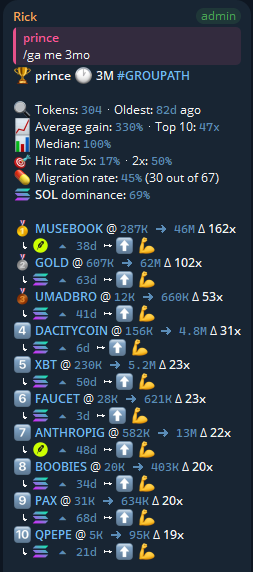
Here's a look at my calls over the last three months, tracked by the community calls bot (past results don't guarantee future results):
If VIP isn't for you, that's all good. Best of luck on your crypto journey.
Vantage: see the market first.